


Karakun at JCON EUROPE 2026
From April 21 to 23, 2026, Karakun will be attending JCON EUROPE 2026 as a sponsor at the Cinedom in Cologne.
JCON is one of Europe’s established conferences for Java, software engineering, and modern development practices, bringing together developers from a wide range of backgrounds.
Meet us at the booth
At our booth, we’ll share insights into how we work and the kinds of projects we’re involved in. Most of all, we’re looking forward to connecting with the community.
We’ll also be exploring current topics such as artificial intelligence and the Cyber Resilience Act. As part of this, we’ll be conducting short interviews with visitors to gather perspectives from day-to-day development work.
And yes, there will also be the usual extras: stickers, a Karakun-branded Spitzgugge filled with Basel treats – and, most importantly, good conversations.
Talk: Accessibility as part of building better software
Our colleague Tamari Gogebashvili will give a talk on Thursday, April 23, from 12:55 to 13:15 (Cinema 6):
“From a Workshop to a Wake-Up Call: My Journey into Accessibility”
In her talk, she shares how her perspective on software development evolved through accessibility – from a compliance-driven topic to an integral part of building robust, high-quality software.
Using practical examples, she covers topics such as semantic HTML, ARIA, keyboard navigation, and automated accessibility testing, showing how small decisions in code can have a significant impact.
Visiting JCON? Come say hello
If you’re attending JCON EUROPE 2026 in Cologne, feel free to stop by our booth – we’d love to chat.
More information about the conference: https://2026.europe.jcon.one/
Agentic AI needs semantics
Agentic AI is widely seen as the next evolution of industrial digitalization. In the future, systems are expected to autonomously select data, parameterize models, and orchestrate analysis processes.
In practice, however, a key challenge quickly becomes apparent: without semantically structured data, AI systems lack the context needed to reliably interpret engineering information.
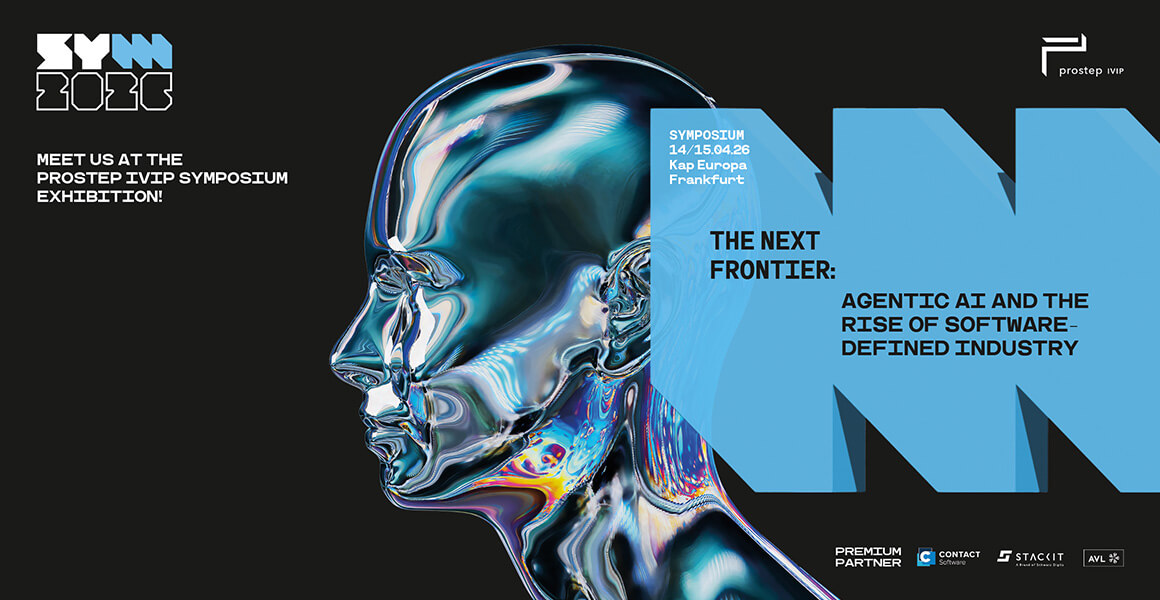
These are exactly the questions discussed at the prostep ivip Symposium 2026, taking place on April 14/15 in Frankfurt. Karakun will be present with both an exhibition booth and a technical presentation.
Semantics as the foundation of intelligent engineering systems
In the development of complex mechatronic systems, vast amounts of data are generated from simulations, modeling activities, and testing. To make this data usable in automated processes, simple storage is not enough. What is needed is a semantic description of system functions and their relationships.
This is where the FDX data standard from prostep ivip comes into play. It provides an open, tool-independent way to describe the functional behavior of components and systems in a semantically precise manner. As such, it forms a key foundation for automated engineering processes and future agentic AI workflows.
Why agentic AI remains blind without semantics
At the prostep ivip Symposium, Mike Mannion (Karakun) and an industry partner from the automotive sector will demonstrate how semantic data models enable the next level of engineering automation.
No Semantics, No Intelligence: Why Agentic AI Remains Blind Without FDX
📅 April 14, 2026
🕒 14:55 Uhr
📍 Auditorium 3
The presentation provides an overview of the current state of automation in engineering and shows how machine learning and agentic AI can further enhance data quality, data selection, and analysis processes.
EXOKNOX: Data management for engineering functional data
At the Karakun booth (Booth 06), we will also present our data management solution EXOKNOX.
Functional data defines the purpose and behavior of each component within a vehicle or other mechatronic products. It serves as a foundation across many stages of product development – from design to validation and verification.
The quality of this data is therefore a key factor in determining the quality of the final product. At the same time, its accessibility and ease of use are critical levers for improving the efficiency of the entire development process.
EXOKNOX was built by engineers for engineers – from practical experience for future challenges.
The solution makes functional data easily accessible, traceable, and centrally available – independent of specific technologies or vendors. This enables a consistent, data-driven development process that also integrates development partners efficiently.
At the same time, EXOKNOX provides an essential foundation for AI-driven product development.
Meet us in Frankfurt
Would you like to learn more about FDX, semantic data models, or AI-driven engineering processes? Visit us at the prostep ivip Symposium 2026 in Frankfurt. Or schedule a meeting with us in advance.
AI Search Beyond the Black Box
In many organisations, knowledge workers spend a significant portion of their time gathering information: searching across repositories, comparing document versions, identifying relevant passages. This is more than inefficient. It ties up valuable capacity and turns knowledge work into repetitive retrieval tasks.
AI-powered search solutions promise faster answers. And speed matters. But in enterprise environments, speed alone is not enough. The real questions are different:
- Which sources were considered?
- Is the information scope clearly defined?
- Are data protection requirements and digital sovereignty ensured?
- Can the solution be integrated into existing systems?
To address these challenges, our HIBU platform follows a hybrid AI search principle.
The approach is based on a simple but crucial sequence: first define the relevant information space through structured search, filtering, or selected document scopes. Only within this controlled context do various AI methods support analysis and insight generation.
The result is not a black box, but transparent and governed information processing aligned with enterprise architecture.
Especially in regulated or security-sensitive environments, this balance between efficiency and control is critical. AI becomes part of the information architecture — not an isolated experiment.
For organisations that want to explore AI potential in a structured way, we also offer an AI Discovery Session as a pragmatic entry point into concrete use cases and strategic options.
Interested in how hybrid AI search with HIBU can create value in your system landscape?
Thinking Security Strategically
Security delivers the greatest impact when it is embedded early in the planning and design of digital systems. Security by Design reduces risks, avoids costly last-minute fixes and improves an organisation’s cyber resilience. Approaches like Shift Left and DevSecOps help identify vulnerabilities early, automate checks and build sustainable security into development processes. Organisations that treat security as a strategic priority create more stable, trustworthy and durable digital products.
Security by Design: Embedding Security Where It Matters Most
Cybersecurity fails rarely because of missing tools, but because security is addressed too late. Security by Design ensures that risks are considered from the very beginning, forming the foundation for robust and trustworthy digital systems.
Organisations that postpone security decisions until shortly before go-live face unnecessary risks, higher costs and avoidable operational disruptions. Early, strategic integration of security prevents exactly that.
Why Security Must Start Early
Digital products and platforms are becoming increasingly complex, and weaknesses in the foundation are difficult or impossible to fix later. Security by Design means:
- identifying risks during planning
- building security directly into the architecture
- considering security as a first-class requirement
Studies consistently show that issues discovered late in the lifecycle are exponentially more expensive to fix than those addressed early. Treating security as an architectural concern reduces long-term costs and strengthens resilience.
Shift Left & DevSecOps: Practical Ways to Build Secure Software
Many modern organisations rely on Shift Left and DevSecOps to operationalise Security by Design. These approaches integrate security into processes and teams rather than treating it as a separate discipline.
Key practices include:
- automated security tests in CI/CD pipelines
- versioned, auditable policies (“Security as Code”)
- continuous monitoring and clear feedback loops
- shared responsibility across engineering, security and operations
The result: fewer vulnerabilities, more stable systems and faster release cycles.
Regulatory Requirements and Strategic Benefits
With the GDPR and the revised Swiss Data Protection Act, Security by Design is not merely best practice — it is a legal requirement. rganisations must implement appropriate technical and organisational measures from the design phase onward, including data minimisation, encryption and clear access controls.
Those who apply these principles consistently benefit twice: they meet regulatory expectations while strengthening the security and reliability of their digital landscape.
Conclusion
Security by Design is not an additional effort, but an investment in quality, resilience and trust. Organisations that consider security early develop faster, more reliably and more economically.
This article is based on the December edition of our column “Schlicht und einfach” in the Swiss IT Magazin Inside IT. The original text was written by Markus Schlichting, CEO of Karakun, who regularly explores fundamental technology topics and their real-world implications in this column.
If you want to think about security strategically and embed it sustainably into your development processes, Karakun is here to support you. Let’s talk.
FAQ
What is Security by Design?
A development approach in which security considerations are integrated from the earliest stages of planning, architecture and implementation.
Why is late-stage security insufficient?
Issues discovered near go-live are harder to fix, more expensive and often lead to operational delays or vulnerabilities in production.
How does DevSecOps support Security by Design?
DevSecOps integrates security into development and operations workflows, supported by automation, shared responsibility and continuous feedback.
Is Security by Design legally required?
Yes. GDPR and Swiss revDSG require organisations to implement appropriate security measures from the design phase onward.
What is the business impact?
Lower costs, fewer incidents, stronger resilience and higher trust in digital products.
Lugano AI Week 2025
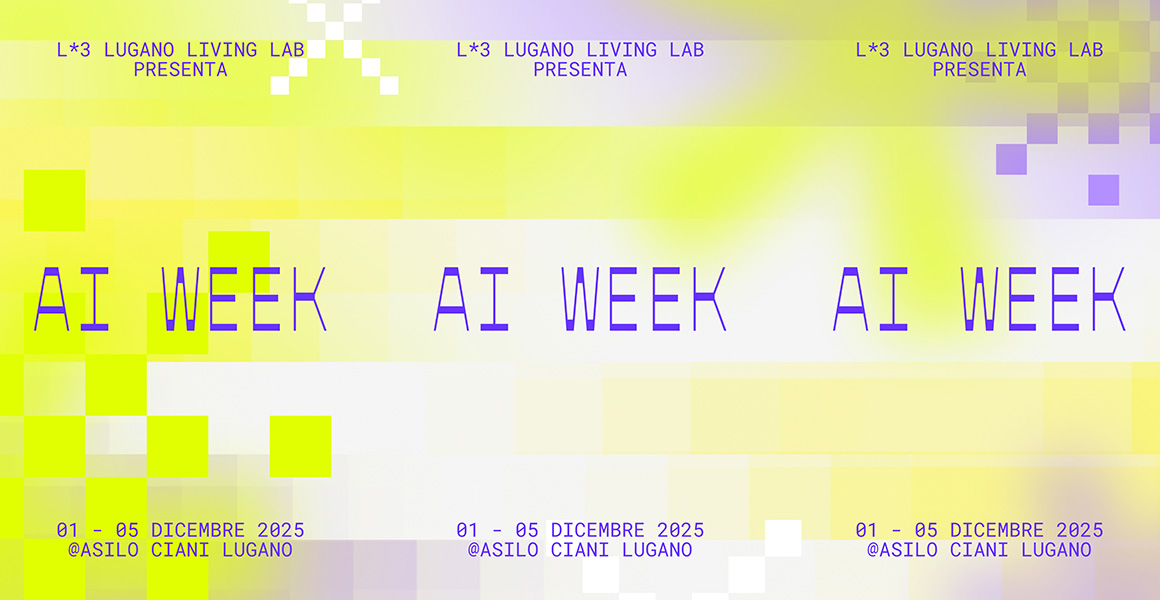
From 1 to 5 December 2025, Asilo Ciani in Lugano will host the second edition of Lugano AI Week – a public event organised by Lugano Living Lab that brings together more than 50 experts to explore the opportunities and impacts of artificial intelligence across creativity, health, work and business.
Karakun: Sponsoring and Talk
Karakun is participating as a Silver Sponsor and will be present throughout On 4 December (12:40–13:00), our experts Sandro Pedrazzini and Olmo Barberis will deliver the talk: From Search to Insight: from research to interaction with content.
Using real-world examples from customer projects, they will demonstrate how modern retrieval pipelines, semantic search and interactive user interfaces help organisations interpret complex information and transform it into actionable knowledge.
An event for everyone interested in understanding and shaping AI
Lugano AI Week offers an accessible way to explore how AI is used today – and how future developments can be shaped. Workshops, talks and open-house sessions at local companies and research institutions provide hands-on insights into current technologies and practical use cases.
Visit us at our booth – or join our talk on 4 December. We look forward to meeting you in Lugano!
FAQ
What is Lugano AI Week?
Lugano AI Week is a free, multi-day event with talks, workshops and open-door sessions offering insights into the local AI ecosystem.
Who organises the event?
The event is organised by Lugano Living Lab, the City of Lugano’s urban innovation laboratory.
Where does the event take place?
At Asilo Ciani, located in central Lugano.
What will Karakun present on site?
We will showcase practical AI solutions, including semantic search, retrieval pipelines and interaction layers for navigating complex information spaces.
Is participation free of charge?
Yes, general participation is free. Workshops require prior registration.
Understanding Digital Sovereignty
Digital dependencies are becoming a strategic risk for many organisations. Political conflicts, foreign legislation and proprietary technologies can affect the availability of critical systems or expose data to jurisdictions outside one’s control. The US CLOUD Act, for example, grants US authorities access to data held by American providers – regardless of where the data is stored. For organisations, this can mean loss of control and reduced operational readiness when it matters most.
As a result, digital sovereignty is gaining relevance – not as a buzzword, but as a prerequisite for long-term resilience.
What Digital Sovereignty Really Means
Digital sovereignty refers to the ability to make independent, informed decisions about one’s own data, systems and technologies at any time. It is not about isolation but about choice and control: external services can be used, provided the organisation maintains transparency, portability and the ability to switch if needed.
Dependencies often emerge gradually: through proprietary interfaces, low workload portability or reliance on specific legal frameworks. If a provider changes its APIs, faces geopolitical issues or withdraws services, core business processes can be affected. The Swiss Federal Audit Office therefore warns that cloud dependencies may endanger the availability of data and applications.
Sovereignty Washing: Local Labels Are Not Enough
With rising demand for “sovereign” solutions, more providers are adopting labels that signal independence. However, data centres located in Europe, data trustees or local partnerships do not automatically ensure true digital sovereignty.
Germany’s Centre for Digital Sovereignty (ZenDiS) warns against “sovereignty washing”: solutions that appear compliant with sovereignty requirements but still depend on proprietary technologies, lack portability or remain subject to foreign jurisdictions.
True digital sovereignty requires:
- Open interfaces and standards
- Verifiable vendor portability without operational risk
- Full control over data and encryption keys
- Transparency through inspectable code
A European label may support trust – but it cannot replace these fundamentals.
Open Source as the Foundation of Independence
Open source is a cornerstone of digital sovereignty. Transparent code and open standards prevent lock-in, improve interoperability and enable independent security assessments.
Public-sector examples illustrate this shift:
- Schleswig-Holstein is gradually migrating parts of its administration to open-source solutions and multi-vendor models.
- In Switzerland, the renewal of the EMBAG strengthens the preference for open technologies.
- The network “Souveräne Digitale Schweiz” brings together stakeholders committed to strengthening digital independence.
Modern open-source ecosystems are driven by professional service providers with clear support models. Organisations gain transparency, influence over future development and long-term technological control.
Five Steps Towards Digital Sovereignty
Strengthening digital sovereignty does not require radical changes. Even incremental measures can have a significant impact:
- Analyse dependencies
Identify critical systems and the providers, technologies and jurisdictions on which they rely. - Use open standards
Avoid proprietary formats; choose interoperable interfaces and portable data structures. - Establish a multi-vendor strategy
Reduce risk by distributing workloads instead of concentrating everything in a single cloud. - Ensure data control
Encrypt sensitive data and manage encryption keys internally. - Test exit scenarios
Assess regularly how services could be replaced or migrated if they became unavailable.
Conclusion
Digital sovereignty is not a political concept but a business imperative. It strengthens resilience and enables organisations to respond flexibly to change – especially in times of geopolitical uncertainty and dynamic technology markets.
Understanding dependencies, adopting open technologies and preparing alternatives helps secure technological independence and long-term organisational viability.
This article is based on the September edition of our column “Schlicht und einfach” in the Swiss IT magazine Inside IT. The original text was written by Markus Schlichting, CEO of Karakun, who regularly explores fundamental technology topics and their real-world implications in this column.
If you would like to understand how to identify dependencies, build sovereign architectures or implement open-source strategies effectively, we are happy to support you. We help organisations design sustainable and independent digital solutions.
FAQ
What is Digital Sovereignty?
Digital sovereignty means maintaining full control over your data, systems and technology choices at all times – without being dependent on a single vendor or external political framework.
Why is digital sovereignty important for organisations?
Because dependencies can cause loss of control, operational disruptions and legal risks. A sovereign IT architecture ensures resilience and flexibility.
How can organisations strengthen digital sovereignty?
By adopting open standards, using multi-vendor strategies, managing encryption keys internally and regularly testing exit scenarios.
What is “sovereignty washing”?
Solutions marketed as “sovereign” that fail to meet key criteria such as interoperability, switchability, transparency or customer control over data and keys.
Why is open source essential for digital sovereignty?
Open source prevents vendor lock-in, increases transparency, improves security and allows independent auditing. It is a foundational element of sovereign digital infrastructures.
Swiss {ai} Weeks
Artificial Intelligence is transforming our lives – but how exactly? What does it mean for our work, our education, our democracy, and our everyday life? And what does AI with Swiss values actually look like?
During the Swiss {ai} Weeks, people and organizations engage in Switzerland’s largest AI action program to find answers to these questions. From September 1 to October 5, 2025, more than 160 events across Switzerland will focus on the responsible design and use of Artificial Intelligence.
Test-Driven Design meets Generative AI
Test-Driven Design (TDD) has been considered a proven – though often debated – method for ensuring software quality for decades. It promises fewer bugs, clearer requirements, faster development, and better team communication.
Today, Generative AI opens up new possibilities: it can automate TDD processes, reduce development efforts, and enhance collaboration within teams.
Online Discussion with Iryna Dohndorf
In our online discussion on October 2, 2025, our expert Iryna Dohndorf (Karakun) will speak from 12:00 noon about the basics of TDD, its opportunities and limitations – and how Generative AI can help take this method to the next level.
Register now and join for free:
Karakun joins the SDS network
The digital future of Switzerland requires independence, security, and sustainability. That is why we are delighted to announce that Karakun has become a member of the Souveräne Digitale Schweiz (SDS) network.
The network brings together companies, public administrations, research institutions, and other stakeholders to jointly develop solutions for a sovereign digital infrastructure in Switzerland. Its goal is to shape digital transformation in a way that remains independent of individual technology providers, trustworthy, and future-proof.
Karakun contributes software engineering expertise from Basel
As a software engineering company based in Basel, we have been developing tailor-made solutions for clients across a wide range of industries for many years. Our work is guided by open standards, transparency, and sustainability. By joining the SDS network, we aim to contribute our expertise and actively help shape Switzerland’s digital sovereignty.
Benefits for businesses and society
Digital sovereignty is far more than a buzzword. It stands for:
- Investment security through open technologies
- Data sovereignty and protection of sensitive information
- Capacity for innovation through cooperation instead of dependency
- Sustainability through future-oriented architectures
These values align closely with our mission to support companies in the long term with high-quality software solutions.
More information about the network: netzwerksds.ch
Interested in digital sovereignty and sustainable software solutions? Get in touch with us to learn more about our work and our involvement in the SDS network.
Digitale Woche Dortmund 2025
The Digitale Woche Dortmund is the leading decentralized digital festival in the Westphalian region. For many years, companies, organizations, and public institutions have opened their doors to inspire tens of thousands of visitors with current digital topics.
In 2025, the event series will once again bring together professionals from business, government, and society. IT decision-makers can expect a diverse program featuring hands-on workshops, insightful keynote talks, interactive meet-ups, and focused discussions – all curated by the Dortmund digital community with a clear focus on relevance, collaboration, and innovation.
Our Offering
Karakun is contributing with two exciting formats that combine technical expertise and open exchange:

Was Dein Browser über Dich verrät
As in previous years, Karakun expert François Martin will demonstrate what information common browsers share with the websites we visit – and what we can (or can’t) do about it.
This talk is in German.
When?
Monday, September 1, 2025, 15:00-16:00

Hackergarten Dortmund
Hackergarten is a collaborative format where people from diverse backgrounds come together to work on projects – whether it’s writing functional software, improving documentation, or creating new learning resources. The goal: valuable contributions that benefit the wider community.
When?
Thursday, September 4, 2025, 18:00-21:00
AI Discovery Session
Artificial Intelligence (AI) is more than just a hype. It is changing how we work, make decisions, and shape the future. But what does that mean for your business in concrete terms? Where does real value emerge? And how can you get started – in a strategic, feasible, and legally compliant way?
Explore AI. Identify opportunities. Develop a strategy.
Our AI Discovery Session provides orientation: compact, practical, and tailored to your business context. In a half-day on-site workshop supported by targeted preparation and follow-up, we build a common understanding, analyze potential use cases, and define first steps towards implementation.
Goals of the AI Discovery Session
- Establish a basic understanding of AI: technology, applications, and limitations
- Communicate relevant legal frameworks (data protection, EU AI Act, GDPR, compliance)
- Identify AI potential within your company’s specific business context
- Evaluate concrete use cases and introduce suitable tools
- Draft a possible implementation roadmap
- Address participants’ individual questions
Our method: interactive and hands-on
The session combines short input segments with active dialogue. For use case development, we apply elements of design thinking and structure ideas using an evaluation matrix based on value and feasibility. Demos and screenshots make AI opportunities tangible, while an open Q&A addresses individual concerns directly.
Do you want to find out which AI use cases make sense for your company? We’re happy to support you.
Claude Honegger appointed to BoD
As of July 1, Claude Honegger has been appointed as a new member of the Board of Directors of Karakun AG. Dr. Elisabeth Maier, co-founder and former CEO of Karakun, has taken over as the new Chair of the Board. The leadership team of the Basel-based software company is now completed by current CEO Markus Schlichting, Christoph Erb, and Luc Haldimann.
With Claude Honegger, Karakun has brought on board a true heavyweight in the IT industry: the former CIO of Credit Suisse is also a board member of swissICT and brings over 30 years of experience in delivering technology solutions in the banking sector and in managing large, complex, global organizations. Today, he acts as an advisor, investor, and board member, supporting both established companies and a number of startups.
At the Annual General Meeting in June 2025, Dr. Elisabeth Maier was also appointed Chair of the Board as of July 1. She succeeds René Stierli, who is stepping down along with Dr. Dirk Krampe and Christian Ribeaud. The board is now completed by Karakun Executive Board member Christoph Erb, Karakun CEO Markus Schlichting, and Luc Haldimann, Co-CEO of Unblu, who has been a member of the Karakun Board since 2019.
Markus Schlichting comments: “With Claude Honegger joining our Board of Directors, we have gained an industry expert whose extensive know-how will greatly benefit both our clients and our internal teams. We sincerely thank the departing members René Stierli, Christian Ribeaud, and Dirk Krampe for their valuable contributions to the Karakun Board.”
Looking ahead, Schlichting adds: “We are now well positioned for upcoming challenges and future growth. With our portfolio of products and services and the proven expertise of our team, we will continue to deliver groundbreaking projects in areas such as open source and AI.”